
Curriculum Overview
The GM STC performance-based curriculum offers training courses across Chevrolet, Buick, GMC, and Cadillac brands. To receive credit for a course, service technicians must demonstrate competency in all applicable course components, which may include web-based, VOD, VCT, and GM Service Know-How Emerging Issues seminars.
Program Structure
If a service technician does not demonstrate sufficient competency, they will be required to review or retake the course component until competency is obtained.
The goal of the performance-based curriculum is to provide a path for service technicians to meet the requirements for GM’s Dealer Divisional Service Training Standards (STS) (for example, become Division Certified) and GM Master Technician Certification (MTC). Technician training is divided into two curricula: GM STC Foundational Curriculum and GM STC Professional Curriculum. Each of these curricula are divided into certification areas. The GM STC Foundational Curriculum does not count toward STS, but completing it is required before a technician can start the GM STC Professional Curriculum.
GM STC Foundational Curriculum
The GM STC Foundational Curriculum has one learning path that is divided into nine service areas:
1
Electrical/ Electronics
2
Engine Repair
3
Infotainment
4
Engine Performance
5
Diesel Engine Performance
6
Automatic Transmission
7
Manual Drivetrain & Axle
8
Brakes
9
HVAC
GM STC Professional Curriculum
The GM STC Professional Curriculum has 16 learning paths:
1
Fundamentals
2
Engine Issues
3
Engine Performance
4
Diesel Engine Performance
5
Engine Repair
6
Electrical/ Electronics
7
Manual Drivetrain & Axle
8
Automatic Transaxle/ Transmission
9
Brakes
10
Steering & Suspension
11
HVAC
12
Mechanical/ Electrical/ Body Repair
13
EV Expert
14
EV Master
15
Body Structural
16
Paint
* Training and certification is offered through GM-approved suppliers and not through GM STC.
The certification areas in the Professional Curriculum are made up of three types of courses:
Dealer Divisional STS Courses
Service technicians need STS courses to service the models that their dealerships sell. These courses are listed on their Learning Paths on the Center of Learning and in this catalog under the Bronze, Silver, and Gold categories. Service technicians are encouraged to take courses in order, from the top of the Learning Path to the bottom. This order best prepares the service technician for each successive course.
Future Bronze, Future Silver, and Future Gold courses will become STS required courses next year and are listed in order to prepare technicians and give them a chance to complete them early.
GM Master Technician Certification Courses
GM MTC courses are represented in each learning path in the Professional Curriculum under the MTC category. This includes the final activity for the learning path: completing the Certification Assessment and earning the MTC (if the technician has the corresponding ASE Certification).
Training Modalities and Course Components Overview




VOD
Video On Demand course components offer service technicians the ability to view previously recorded content at any time. All Service Know-How Seminars are available for viewing on www.centerlearning.com.
With this VOD capability, service technicians can review video course material as needed. VOD content may be viewed in several ways:
From the Catalog page, type the course number or name in the search box
From the home page, select a Learning Path, find it, and then select Launch.
All testing for GM Service Know-How videos is accomplished through www.centerlearning.com. Service technicians receive credit for the video components by successful completing appropriate post-tests available.
VOD content has a transcript that can be downloaded which contains the exact text of the audio in the video. These transcripts are located within the Technician Guides for each course. These Guides are found on the course details page on the Center of Learning.
VOD courses end with a V in the course number; for example, 8L90 Automatic Transmission Unit Repair (17041.70V).

Video Resource Library
The videos in the Video Resource Library are short, informative, and are meant to supplement technicians’ technical and non-technical knowledge.
Simply click on the Video Resource Library box located on the Center of Learning home page for access to over 100 branded videos in categories ranging from Auto Body and Paint to Brakes, from Electrical/Electronics to Tools and Equipment.
These brief instructional videos, each from one to nine minutes long, are quick and convenient to view and drive you deeper into topics of instructional interest and value. A representative list of videos include:
• Manually Accessing Center Console
• Understanding and Measuring Amperage
• Driver’s Side Airbag Removal
Video Resource Library videos are not part of any job role Learning Path, there are no tests to take, and no transcripts. They can also be accessed via mobile devices using the Android and iPhone platforms.
Center of Learning training is available at the dealership through a variety of media.
GM STC courses have evolved from traditional instructor-led to blended learning with more flexible delivery methods while emphasizing performance-based outcomes. This approach better supports service technician training by offering the appropriate media mix for the needed training in the 21st century.
The media mix includes, but is not exclusive to, Web-Based Training (WBT), Virtual Classroom Training (VCT), Video On-Demand (VOD), Performance Support Objects (PSO), and the Video Resource Library. This media mix allows service technicians to improve their product knowledge and advance their repair and diagnostic skills while spending less time away from the dealership.
 Courses can also be accessed via a tablet; just look for this symbol. GM STC offers two modes of training:
- Asynchronous training, also known as self-paced training, doesn’t require learners and instructor/s to be online or in person at the same time for instruction.
- Synchronous training requires both learners and instructor/s to be present at the same time for instruction.
GM Courseware Accessibility
Accessibility Options
GM STC also offers a number of Accessibility options to help accommodate those that may need them. Review each type of training below to understand the different options available. If additional assistance is needed that is not accommodated by the information below, please reach out to the Help Desk and/or Training Center (depending on the type of training that accommodations are needed for) in a timely manner before the class session, so proper accommodations can be made.

WBT & Interactive Videos
GM STC’s WBT courses are designed with accommodation in mind. Each WBT course automatically provides on-screen text, plus a narrator (audio), that walks technicians through the course. In addition, WBTs also have an available narration script (text-based). Most WBTs are even available in Spanish! Below, we show you how to access these settings to have the WBTs fit your needs.

Video On Demand
VOD courses have a transcript that can be downloaded which contains the exact text of the audio in the video. To find it, navigate to the catalog entry for the course in the Center of Learning. Additionally, all videos on the Center of Learning feature closed captioning. Turning on the closed captioning option allows students to read the script of the video. To turn this feature on, select the “CC” button within the video navigation bar.

Virtual Classroom Training (VCT)
VCT courses have a Technician Guide that can be downloaded prior to the course by the student. The guide covers the topics discussed in the course and includes transcripts of any videos that are played. Due to VCT courses being live Internet-based training, some variations will occur that the guide may not cover. To find the Technician Guide, navigate to the catalog entry for the course in the Center of Learning. A link to the downloadable attachment is located beneath the course description.

Virtual Instructor-Led Training (V-ILT)
Since V-ILTs use the VCT system, accommodations for technicians who need them are very similar to those offered by VCT courses. The Technician Guide can be found on the course details page on the Center of Learning, which will contain a transcript of any videos that are played during the course.
One of the major differences between V-ILTs and VCTs is that V-ILTs are much more intimate and interactive. Live discussion is required as a portion of the course, so if accommodations are needed for these segments, reach out to the Help Desk within a timely manner before the class session so they can be made.
Virtual and Performance Instructor-Led Training (V/P-ILT)
Each training center facility has accommodations for ease of access. When attending a Hands-On ILT or P-ILT course, all participants will be provided a tablet with the course’s Technician Guide downloaded and ready for use during class. These Guides are comprehensive and cover the topics discussed in the course. Some variation will occur during the live event that the Guide may not cover.
If a technician requires the assistance of a translator/interpreter they are welcome to join the class. An attending interpreter/ translator does not need to be enrolled in the class session, however, we ask that the technician or dealership contact the training center prior to the course to inform them that the additional person will be attending.
Please inform your interpreter/translator in advance that they are also expected to comply with the training center safety procedures and practices and must wear the proper Personal Protective Equipment (PPE).
Course Components
GM STC blended training delivers courses in multiple components; these different components provide the service technician with the skills necessary to “Fix it Right the First Time!”
Multiple component courses may use combinations of the following media:
- Web-based training addresses the knowledge portion of the class. The material is designed to teach the service technician theory of operation and function of the systems and components, and to introduce diagnostic procedures.
- VCT reinforces the knowledge provided in the WBT and introduces the service technician to diagnostic skills necessary to repair the vehicle.
- Hands On or V/P-ILT allows the service technician to practice diagnostic skills in a setting similar to the work environment.
- Virtual and Performance ILT series allow technicians to complete part of the Hands-On course within their dealership using the VCT system. Finally, the technician attends a Performance Instructor-Led Training at a GM Training Center where diagnostic procedures are focused on. This series is a new way technicians can complete their Hands-On requirements, reducing the amount of the time they are out of the dealership.
- Diagnostic Exercises facilitate the practice of skills, educate, and update knowledge.
- Video On Demand has an easy-to-use “Search Videos” function, which allows users to review specific content. This search capability allows technicians to locate a specific topic at any time.
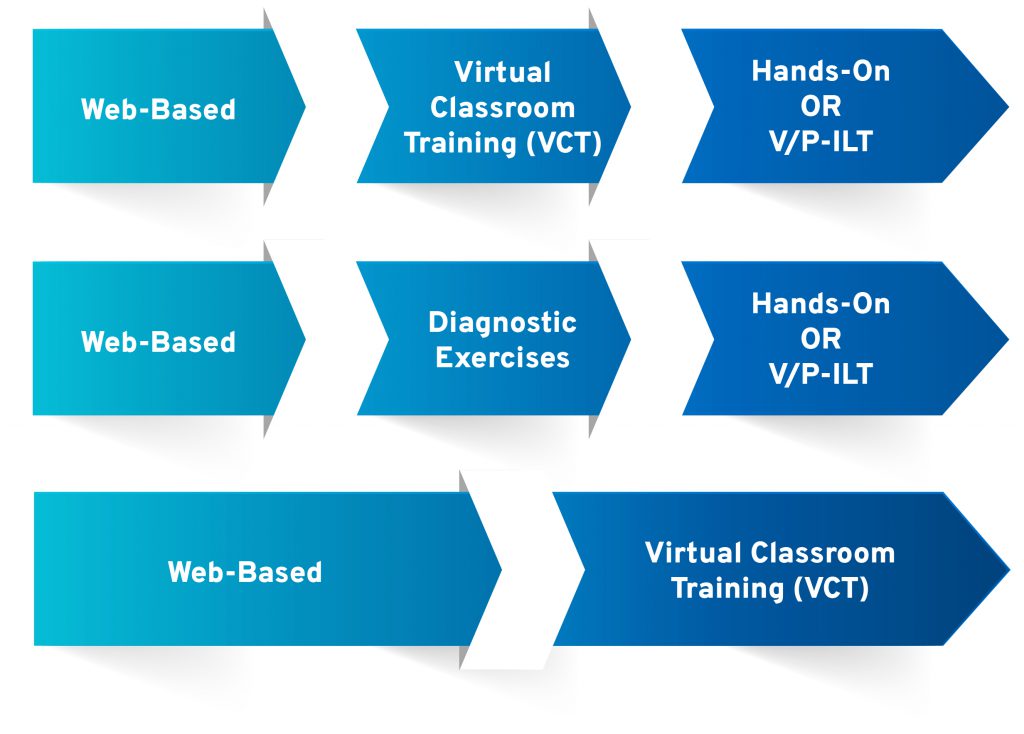
In each component of the blended training, successful completion of a final test is required for course component credit. Videos augment the basic course components and should be taken at the appropriate time in the Learning Path based on prerequisites.
GM’s Levels of Evaluation
The GM STC program has an evaluation system in place to measure the effectiveness of the performance-based curriculum and the delivery media. GM STC evaluates the performance of the training program at four levels:
Other Feedback
GM’s Customer Care and Aftersales division provides Dealer Satisfaction Survey results to GM STC to gauge service managers’ opinions of GM STC training products. The survey results provide valuable input for short-term and long-term improvement initiatives, ensuring continuous improvement to the GM STC program.
ASE Accreditation
Becoming an ASE Accredited Training Provider is a highly regarded accomplishment in the service technical training area, as it recognizes those organizations who provide outstanding technical training to service technicians. GM STC initially achieved this status in the automotive training industry by being awarded accreditation for its Service Technical Training curriculum in 2001.
Becoming accredited is a voluntary ASE certification program for training entities that provide continuing education to working automotive service technicians. The ASE Education Foundation administers the program and the National Institute for Automotive Service Excellence (ASE) grants the certification.
The accreditation program certifies training providers for working service technicians. ASE Education Foundation evaluates the training providers’ process of developing and delivering training and then recommends accreditation, when appropriate, as an ASE Certified Training Provider.
There are many benefits to receiving training from a ASE Certified Training Provider including:
- The recognition that the training provider and its processes have been reviewed against industry established and endorsed standards.
- The accreditation process serves as a tool for program improvement.
Credit for Course Components (known as Cross Credits)
The Center of Learning enables technicians who have successfully completed a previous version of a course to conveniently get credit for a new version of the same course in their training history without having to repeat the entire course again.
Testing
Most courses allow for two test attempts. Technicians should review the materials carefully before taking the test; if the test attempts are exceeded, technicians will be locked out indefinitely until GM STC resets the tests on a periodic basis.
Video On Demand: Testing for content on VOD is available by going to the Course Details page in www.centerlearning.com. When the course is live and ready for viewing, service technicians should click “Launch”. When they are done viewing the course, they must click on the “Take Test” link that appears in the Video On-Demand player at the completion of the video.
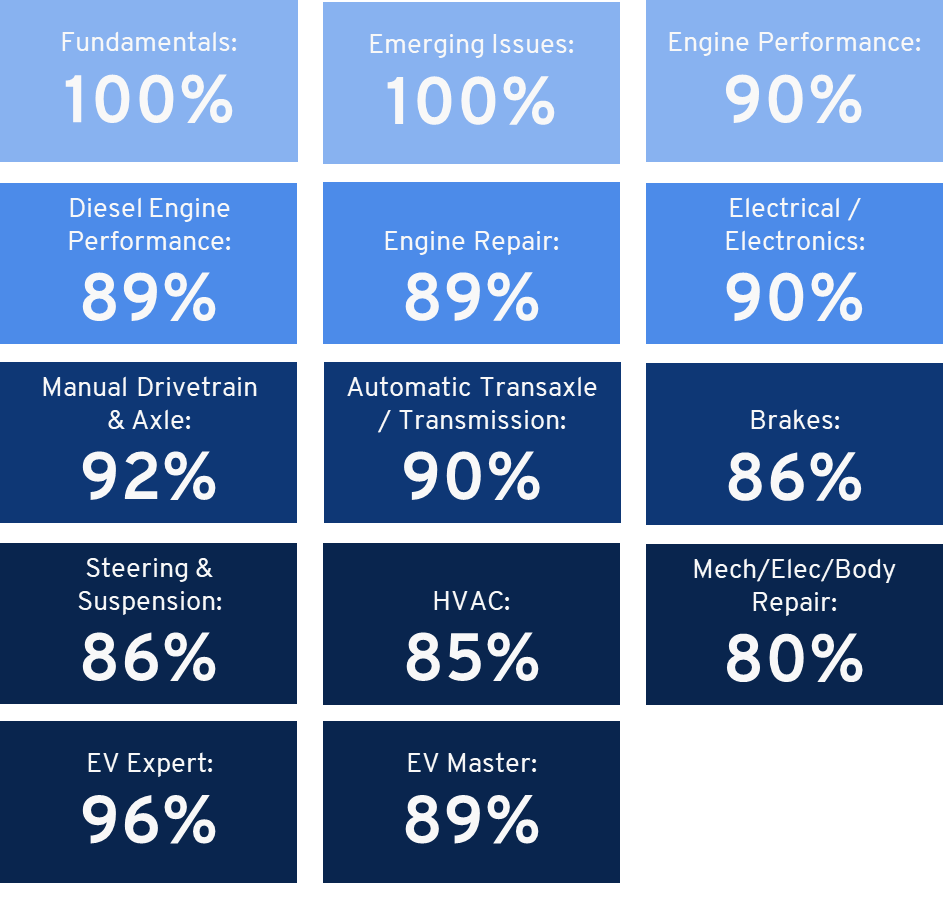
May Earn Without Leaving Their Dealership